
UAE oil hub faces new war pressure after done attack hits Fujairah port area

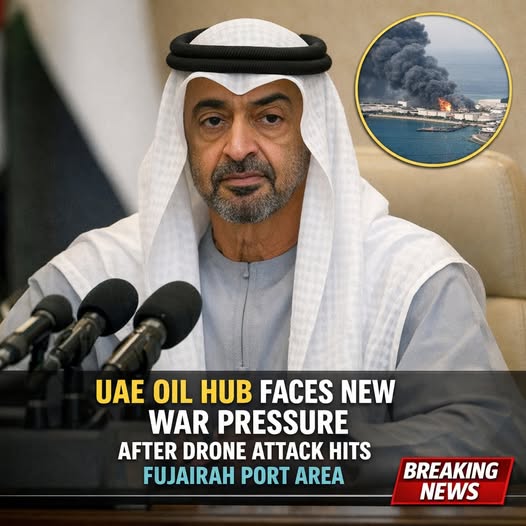
New pressure is building around one of the UAE’s most important energy gateways after a drone attack triggered a fire in the Fujairah port area and forced some oil-loading operations to stop. Reuters reported the incident on March 14, saying UAE authorities linked the fire to debris that fell during an interception of a drone.
The story matters because Fujairah is not just a local port. Reuters reports it exported more than 1.7 million barrels per day of crude and refined fuels in 2025, and it sits outside the Strait of Hormuz, making it one of the region’s most strategic oil hubs during the current crisis.
Reuters also said a Jordanian citizen was lightly injured, while civil defense teams worked to contain the blaze. At the time of reporting, ADNOC had not publicly commented on the disruption.
This attack is getting wider attention because Fujairah is a key route for exports that bypass the Strait of Hormuz through the Habshan-Fujairah pipeline, so any disruption there quickly raises concern about supply pressure and energy-market stability.
The timing is especially sensitive because Reuters also reported that Iran had warned energy infrastructure tied to countries cooperating with the U.S. could face retaliation after the strike on Kharg Island. That has made every incident around Gulf ports far more important to global markets.
For now, the world is watching whether this remains a limited disruption or becomes part of a broader pattern of pressure on Gulf energy routes.
