
Iran’s New Weapon Dancing “SEJJIL” Missile that shocked US and Israel
Iran Finally Unleashes 'DOOMSDAY' Weapon Israel, US Feared? 1.5-Ton ‘SEJJIL MISSILE' Debuts Amid War

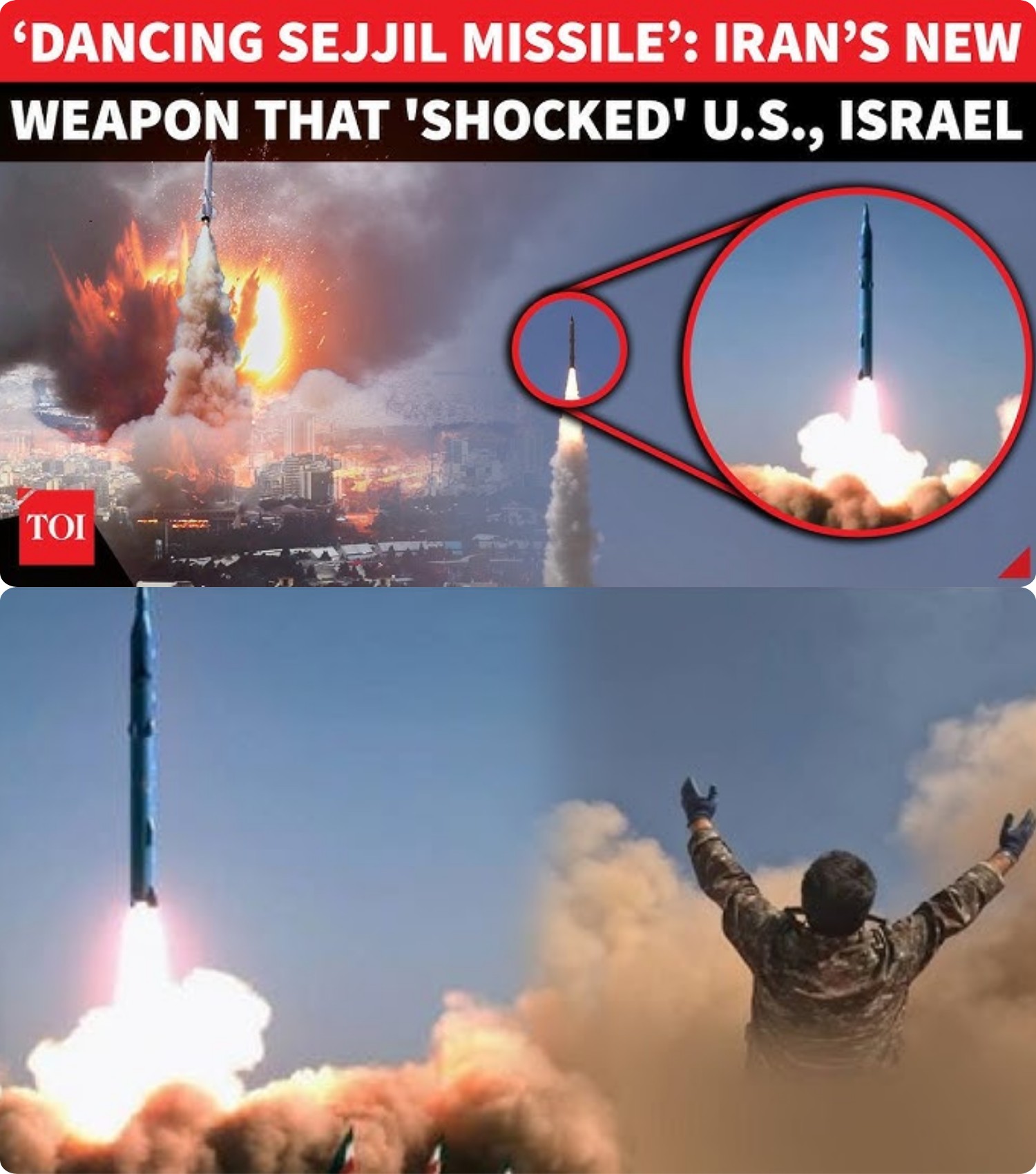
Iran has launched the 54th wave of attacks in its ongoing military campaign, marking a major escalation in the conflict with Israel and the United States. The latest strikes reportedly include the first deployment of the Sejjil ballistic missile, a solid-fuel, two-stage medium-range system capable of carrying up to 1,000 kg warheads across 2,000–2,500 km. Analysts say its rapid launch capability reduces warning time for targets and extends Iran’s reach across the Middle East, including Israel, Saudi Arabia, Turkey, and several U.S. military bases. The operation is described by the IRGC as retaliation for recent strikes on civilian workers.
Introduction: A New Phase in a Dangerous Conflict
The conflict involving Iran, Israel, and the United States has entered one of its most volatile stages yet. What began as a series of strikes, counterstrikes, and regional tensions has steadily grown into a complex confrontation involving advanced missile systems, air power, cyber warfare, and proxy forces across the Middle East.
In the latest escalation, Iran has reportedly introduced one of the most advanced weapons in its arsenal into the conflict: the Sejjil ballistic missile. Iranian officials described the launch as part of a new wave of retaliatory attacks following strikes on facilities inside Iran. The move immediately drew international attention, as the Sejjil represents a significant leap in Iran’s missile capabilities.
For years, defense analysts have monitored the development of this missile system, often describing it as one of Iran’s most powerful long-range weapons. Unlike many of Iran’s older ballistic missiles, the Sejjil uses solid fuel, enabling faster launches and greater battlefield flexibility.
The reported deployment of this weapon raises serious questions about the direction of the war, the resilience of regional missile defense systems, and the broader strategic balance in the Middle East.
To understand why this development matters, it is important to examine the missile itself, the strategic environment in which it is being used, and the potential consequences for all sides involved.
Understanding the Sejjil Missile
The Sejjil missile is classified as a two-stage, solid-fueled medium-range ballistic missile (MRBM). It has been in development for many years, but its operational deployment has been closely watched by military observers around the world.
Estimates suggest the missile has a range between 2,000 and 2,500 kilometers. This range allows it to reach a wide area of strategic targets across the Middle East, including Israel, parts of Europe, and numerous U.S. military installations located throughout the region.
One of the defining features of the Sejjil system is its solid-fuel propulsion.
Older ballistic missiles often rely on liquid fuel, which requires lengthy fueling procedures before launch. These preparations can take hours and often involve visible support vehicles and infrastructure, making the launch sites easier to detect through satellite surveillance.
Solid-fuel missiles, by contrast, are far more flexible.
They can be stored in a ready-to-launch state and fired with minimal preparation time. This dramatically reduces warning time for potential targets and makes the launch platforms harder to track.
For military planners on the receiving end of such systems, that difference can be critical.
Why Solid Fuel Changes the Game
Solid-fuel missile technology represents a major milestone for any missile program.
The primary advantage lies in speed and survivability.
Because solid-fuel missiles do not require pre-launch fueling, they can be transported on mobile launch platforms and fired quickly after receiving launch orders. These platforms can move frequently, making them difficult to locate and destroy.
This mobility complicates the efforts of adversaries attempting to neutralize missile forces through preemptive strikes.
Additionally, the rapid launch capability significantly shortens the time available for missile defense systems to respond.
Early warning systems must detect the launch, identify the missile’s trajectory, and activate interception systems within minutes.
In high-intensity conflict scenarios where dozens or even hundreds of missiles may be launched in waves, this compressed timeline places enormous pressure on defensive networks.
The Strategic Geography of the Missile’s Range
The estimated range of the Sejjil missile allows it to cover a large portion of the Middle East.
From launch sites within Iran, the missile could theoretically reach:
- Israel
- Saudi Arabia
- Turkey
- U.S. bases in the Persian Gulf
- Military facilities in Iraq and Syria
This geographic reach gives Iran a powerful strategic deterrent capability.
Even if its air force is limited compared to those of its rivals, long-range missiles allow Iran to project force across vast distances without relying on aircraft.
Ballistic missiles travel at extremely high speeds, often reaching several kilometers per second during their descent phase. This velocity makes interception difficult, especially when multiple missiles are launched simultaneously.
The Challenge of Missile Defense
Missile defense systems have improved significantly in recent decades, but they still face substantial challenges when confronting large-scale missile attacks.
Israel has developed one of the most sophisticated multi-layered missile defense networks in the world. This system includes several components designed to intercept threats at different ranges and altitudes.
These include systems designed for:
- Short-range rocket interception
- Medium-range missile defense
- High-altitude ballistic missile interception
Despite these capabilities, missile defense systems are not unlimited.
Each interceptor missile is expensive and must be carefully allocated during sustained attacks. When large numbers of incoming missiles are launched in waves, defenders may face difficult choices about which threats to prioritize.
This dynamic creates what analysts call the cost-exchange problem.
If attackers can launch relatively inexpensive missiles or drones in large numbers, they may eventually exhaust the defender’s supply of interceptors.
The Complication of Cluster Warheads
Another factor complicating missile defense is the use of cluster munitions.
Some ballistic missiles can carry warheads that release multiple smaller submunitions during the final phase of flight. These bomblets spread across a wide area, increasing the likelihood of damage to targets on the ground.
From a defensive standpoint, cluster warheads pose several challenges.
Intercepting the missile before it releases its payload is the most effective solution. Once the submunitions separate, however, they become far more difficult to stop individually.
Each bomblet is smaller, faster, and often less predictable in its trajectory.
Even if defensive systems intercept the main missile body, some submunitions may still fall toward the target area.
For civilian populations and military installations alike, this creates additional risks.
The Pressure on Interceptor Supplies
Sustained missile attacks place immense strain on defensive stockpiles.
Interceptors are complex weapons that require significant time and resources to manufacture. During prolonged conflicts, replenishing these supplies can become a major logistical challenge.
Reports have suggested that continuous waves of missile launches may force defenders to use large numbers of interceptors over short periods of time.
This dynamic can create a strategic dilemma: how to maintain adequate defenses while also preserving resources for future attacks.
For allied nations supporting missile defense systems, decisions about sharing interceptors or deploying additional defenses can also become politically sensitive.
Regional Implications of Escalation
The introduction of advanced ballistic missiles into an already volatile conflict has implications far beyond the immediate battlefield.
Countries across the Middle East are closely watching developments, particularly those located within the missile’s potential range.
Energy infrastructure, military bases, shipping routes, and urban centers could all become potential targets if the conflict expands.
The Strait of Hormuz, one of the world’s most critical maritime chokepoints, is especially sensitive to regional instability. A significant portion of global oil shipments passes through this narrow waterway each day.
Any disruption in the area could have major economic consequences for the global energy market.
The Role of Deterrence
Ballistic missiles often serve a dual role in military strategy.
On one hand, they are offensive weapons capable of striking distant targets. On the other, they function as tools of deterrence.
By demonstrating the ability to reach strategic targets, nations aim to discourage adversaries from escalating conflicts further.
However, deterrence can be fragile.
When multiple parties believe their survival or national security is at stake, the presence of powerful weapons can sometimes increase tensions rather than reduce them.
This dynamic is one reason why missile development programs are closely monitored by international organizations and governments around the world.
The Human Dimension of Missile Warfare
While discussions about missiles often focus on technology and strategy, the human consequences of missile warfare should not be overlooked.
Ballistic missile attacks can cause significant destruction, particularly when aimed at urban areas or critical infrastructure.
Civil defense measures such as early warning systems and shelters play an important role in reducing casualties. In regions frequently targeted by missile attacks, public alert systems allow civilians to seek shelter within minutes of detection.
Even with these precautions, however, missile strikes can still result in injuries, damage, and loss of life.
The psychological impact of repeated missile warnings and attacks can also take a heavy toll on communities.
The International Response
As the conflict escalates, governments and international organizations are closely monitoring the situation.
Diplomatic efforts aimed at preventing further escalation are likely to intensify, particularly as concerns grow about the potential for a wider regional war.
The involvement of major global powers adds another layer of complexity. Military alliances, economic interests, and political relationships all influence how different nations respond to developments in the region.
For many countries, the priority remains preventing the conflict from expanding beyond its current scope.
The Future of the Conflict
The deployment of advanced missile systems marks an important moment in the ongoing confrontation.
Whether it represents a temporary escalation or the beginning of a broader phase of missile warfare remains uncertain.
Much will depend on how each side responds in the coming weeks.
Military planners must weigh the risks of escalation against the potential benefits of continued operations. Political leaders must consider domestic pressures, international alliances, and long-term strategic goals.
At the same time, millions of civilians across the region continue to live under the shadow of the conflict.
Conclusion: A Dangerous Turning Point
The reported use of the Sejjil missile highlights how rapidly modern conflicts can evolve when advanced weapons enter the battlefield.
Solid-fuel ballistic missiles provide speed, mobility, and reach—capabilities that can dramatically alter the strategic landscape.
For defenders, these weapons present complex challenges involving detection, interception, and resource management.
For the region as a whole, they serve as a stark reminder of how fragile the balance of power can be.
As tensions continue to rise, the decisions made by military commanders and political leaders in the coming days could determine whether the conflict moves toward de-escalation or expands into an even more dangerous phase.
In the modern era of warfare, technology may shape the battlefield—but ultimately, it is human choices that determine the course of history.
