
China Intensifies Military Pressure Around Taiwan as U.S. Focuses on Middle East Conflict
Rising geopolitical tensions are drawing global attention as China significantly increases its military presence around Taiwan at a time when the United States is heavily engaged in the Middle East.

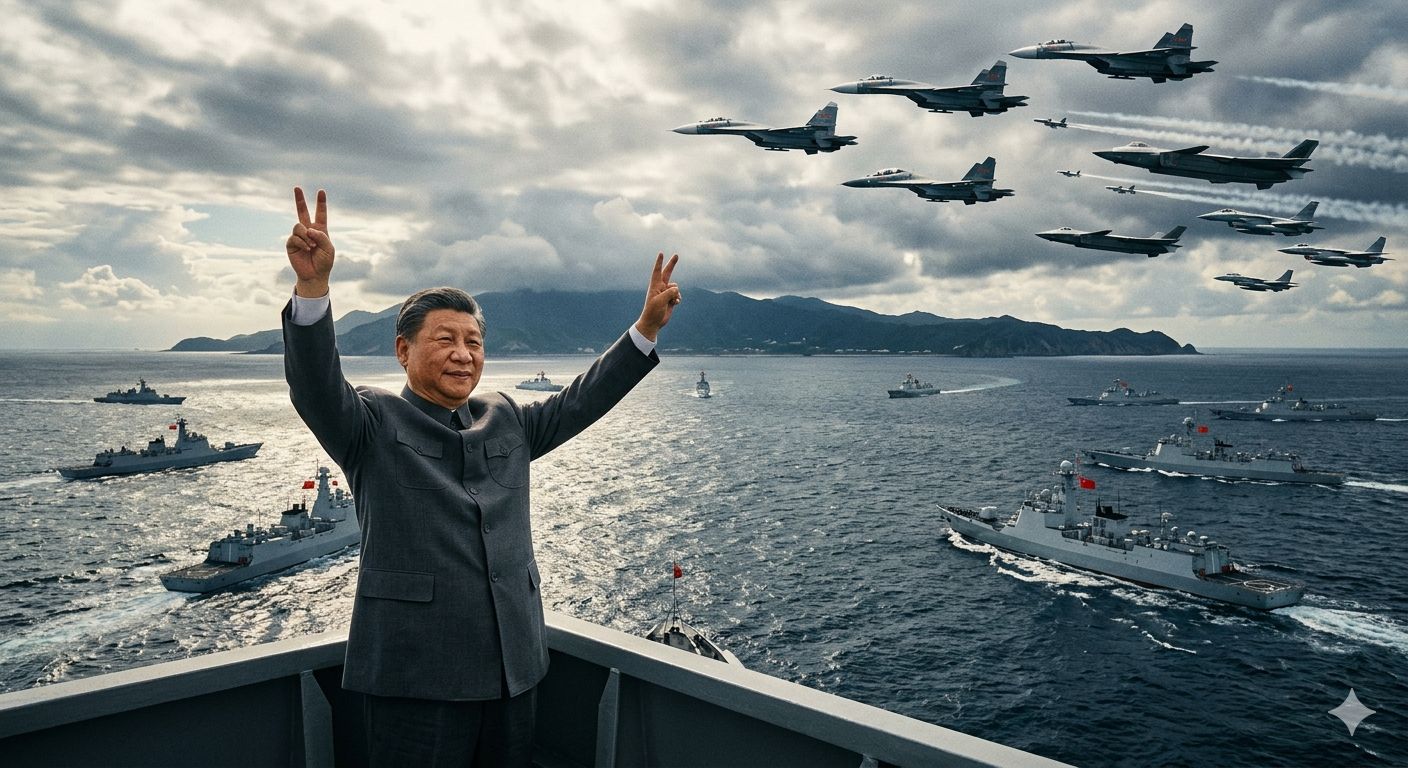
According to Taiwan’s defense authorities, the island’s military detected 26 Chinese fighter jets and seven naval warships operating around Taiwan in coordinated patrols. The aircraft and ships were observed encircling the island, marking the largest Chinese military presence near Taiwan in recent weeks.
The timing of the operation has raised concerns among analysts because it occurred on the same day the United States announced it would deploy additional troops to the Middle East amid escalating tensions with Iran.
Taiwan Signs Major Arms Deal
Amid growing security concerns, Taiwan has reportedly signed a $9 billion arms agreement just before a key March 15 deadline. One component of the deal includes 82 HIMARS (High Mobility Artillery Rocket Systems), with the contract expected to expire on March 26 if not finalized.
Security experts believe the accelerated agreement reflects Taiwan’s effort to strengthen its defensive capabilities in response to increasing military pressure from Beijing.
Regional Security Concerns Grow
The situation is further complicated by shifting regional military dynamics. Reports suggest that South Korea has quietly withdrawn elements of its THAAD missile defense system, a move that some analysts link to the broader security situation influenced by the Iran crisis.
At the same time, experts warn that North Korea could potentially take advantage of regional instability, creating additional threats toward Japan and South Korea if tensions escalate further.
Questions Over China’s Intentions
Another development drawing attention from military analysts is China’s 16-day continuous presence near Taiwan, which was officially described as military drills. However, the sudden reappearance of 26 fighter jets circling the island after this period has raised speculation.
Some experts believe the extended presence may have been reconnaissance or preparation exercises, allowing China to observe Taiwan’s defensive responses and operational patterns.
Global Economic Stakes
Taiwan’s strategic importance extends far beyond military considerations. The island is home to TSMC, the world’s leading advanced semiconductor manufacturer. The company produces around 90% of the world’s most advanced chips, which power artificial intelligence systems, smartphones, and modern vehicles.
Analysts warn that any disruption to Taiwan’s semiconductor production could trigger massive global economic consequences.
One market analyst suggested that a serious conflict could potentially lead to a 50% collapse in the S&P 500 index, reflecting the enormous dependence of global technology and manufacturing sectors on Taiwanese chip production.
Reports from The New York Times have also warned that such a scenario could severely damage the U.S. economy, given its reliance on semiconductor supply chains.
Strategic Dilemma for Washington
The evolving situation presents a complex strategic dilemma for the United States. With significant military resources currently deployed in the Middle East and concerns about declining missile stockpiles, Washington may have limited immediate capacity to respond to another major crisis in the Indo-Pacific.
As tensions continue to rise, global observers are closely watching whether China’s recent actions represent routine military pressure or a signal of a more significant strategic move toward Taiwan.
For now, the key question facing policymakers and military planners remains: If China escalates the situation around Taiwan while the United States is stretched across multiple regions, how will Washington respond?
