
Big shock to America
Iran is ready to open Strait of Hormuz but Oil must be paid in Yuan not Dollars

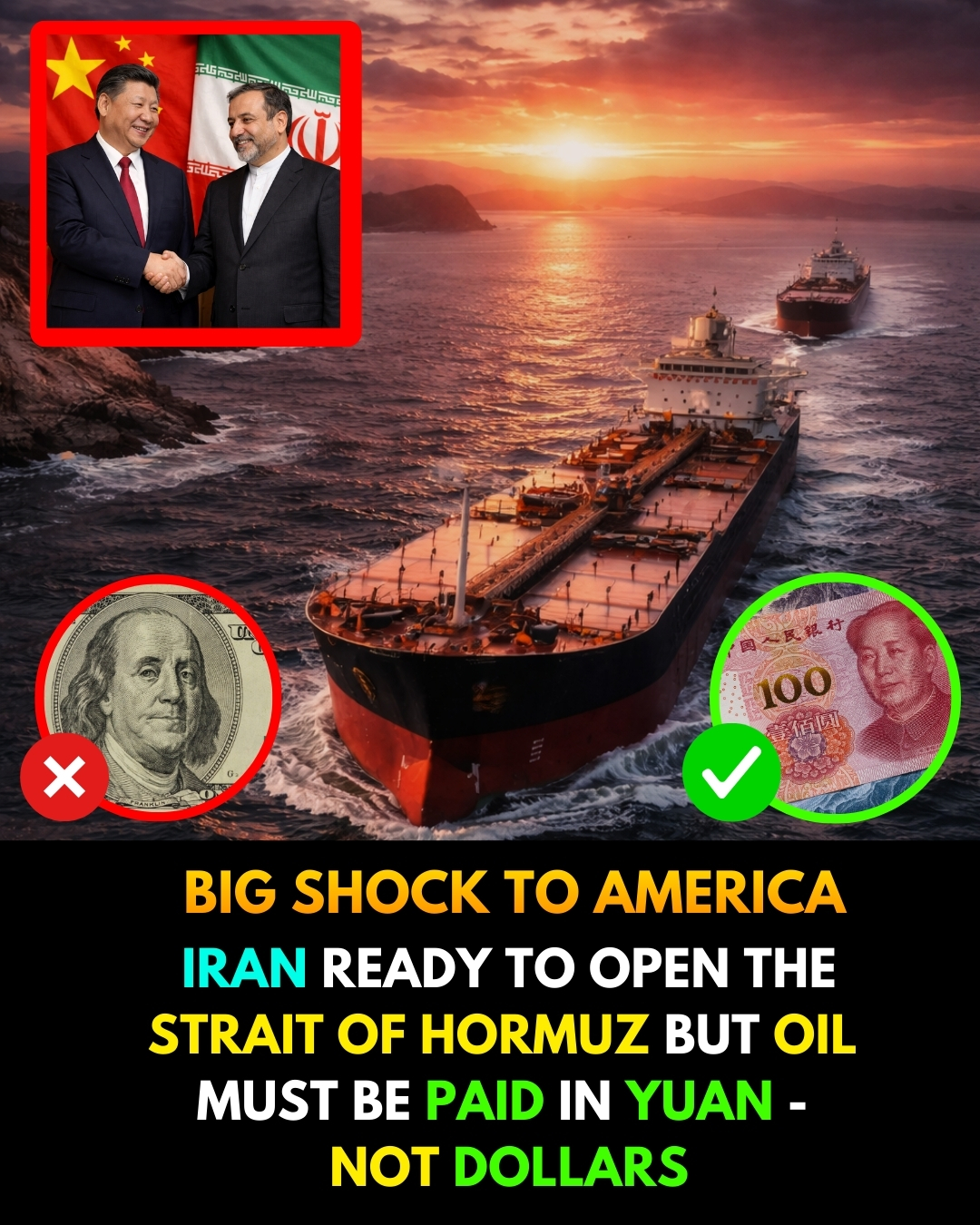
Chinese yuan is now being discussed as a possible alternative to the U.S. dollar in global oil trade, a development that could send major ripples through international financial markets. For decades, the dollar has dominated energy transactions worldwide, but a proposal reportedly coming from Tehran could challenge that long-standing system. This has raised an important question in political and economic circles: if such a shift happens, is Washington — and leaders like Donald Trump — prepared for the potential consequences?
Reports indicate that Iran may be considering allowing limited oil tanker passage through the Strait of Hormuz, one of the most strategically vital maritime routes in the world. Nearly 20 percent of the global oil supply moves through this narrow waterway every day, making it a crucial artery for international energy markets and global trade.
However, Tehran is reportedly weighing a significant condition for reopening the passage. Oil shipments moving through the strait could be required to be traded in Chinese yuan rather than U.S. dollars. Such a step would represent a serious challenge to the long-established petrodollar system that has shaped global oil markets and international finance for decades.
Energy analysts say that even a partial move away from dollar-based oil transactions could carry wide-ranging economic implications. The dominance of the U.S. dollar in global energy trade has long supported American financial influence worldwide. If oil payments begin shifting to yuan, it could strengthen China’s currency in international markets and deepen economic ties between Beijing and major energy producers.
The Strait of Hormuz has already become a focal point of geopolitical tension. Any changes to shipping access or the currency used for oil transactions could affect global shipping routes, energy prices, and international alliances.
If Iran moves forward with such a plan, the impact would likely extend far beyond regional politics. It could spark a broader global conversation about the balance of economic power and the future role of the U.S. dollar in international trade.
The question now being raised by economists and global observers is whether this could mark the beginning of a shift in the global financial system, potentially challenging the decades-long dominance of the dollar in energy markets.
